

What Is Multi-Dose Packaging (and Why Doesn’t Every Pharmacy Offer It)?
The simplest thing a pharmacy can do to help you stay healthy — and how to get started.
Having your pharmacy put your medications into strip packaging, bubble packs, or med boxes, a service often called adherence packaging, helps you take your medications at the optimal time and dramatically reduces the trips to the pharmacy. So not only is it more convenient, but it also leads to fewer missed doses and better health outcomes. And the best part about it? At Qual-i-tee Pharmacy, it’s included at no extra charge with your monthly prescription pickup.
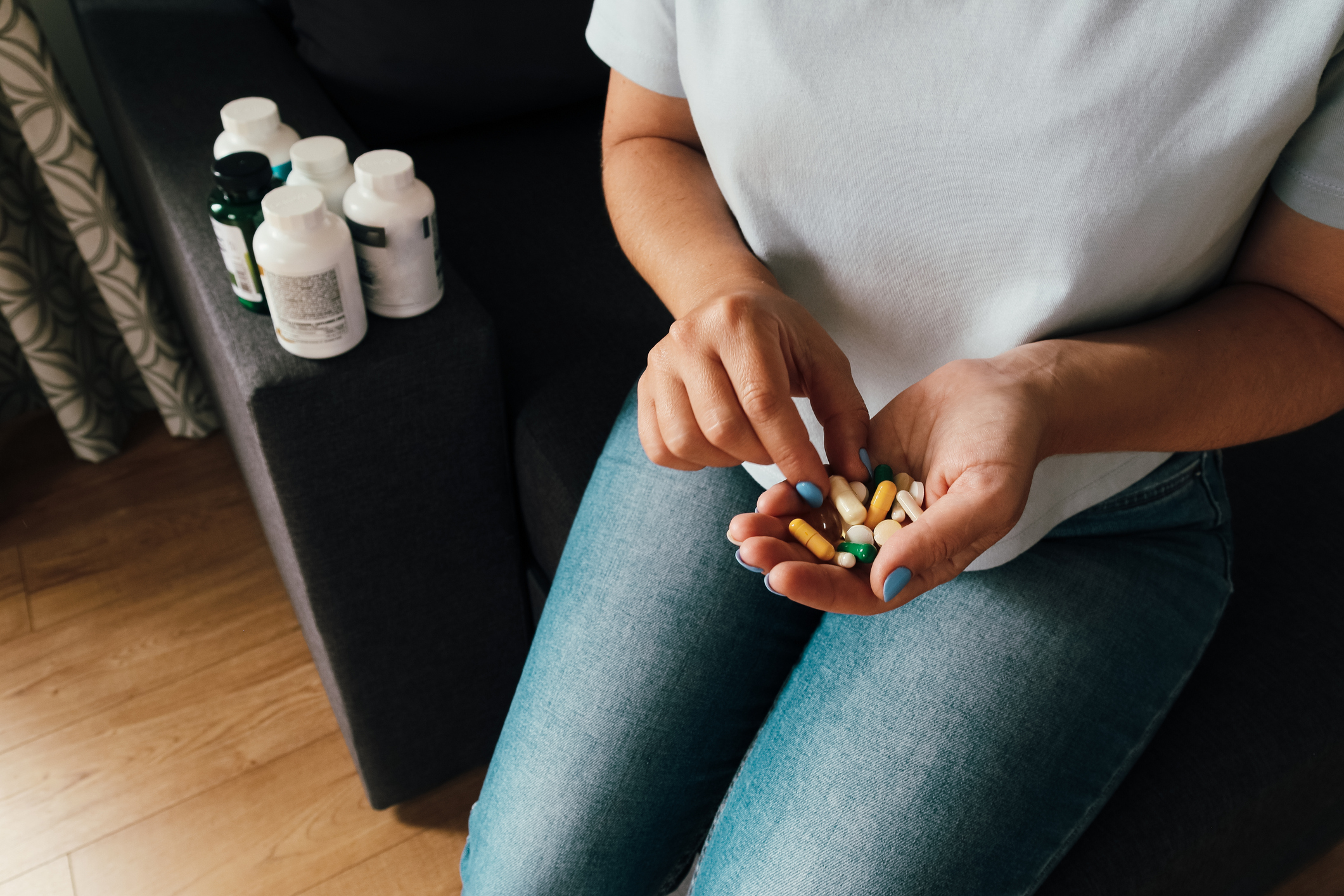
As a pharmacist with over 20 years of experience, let me describe a scene I’ve watched play out countless times. A patient comes in to pick up their medications. They’re on metoprolol for their heart, atorvastatin for cholesterol, metformin for diabetes, sertraline for anxiety, and lisinopril for blood pressure. Some of the labels say “once daily, some “twice daily.”
The patient is good at taking their morning medication but often forgets the evening dose. When it’s time for a refill, they only need three of their medications because there are still pills left in the other two bottles owing to those missed doses. After just a couple of months, their medications, which were originally filled at the same time, are no longer matched up. Those five medications are now running out at different times, leading to multiple trips to the pharmacy per month.
Multi-dose packaging fixes this. We believe it is so beneficial for the health and safety of our patients that we offer it at no additional charge to our monthly medication patients, and I want to walk you through the whole thing: what it is, why it works, and what it takes to switch.
What is Multi-Dose Packaging?
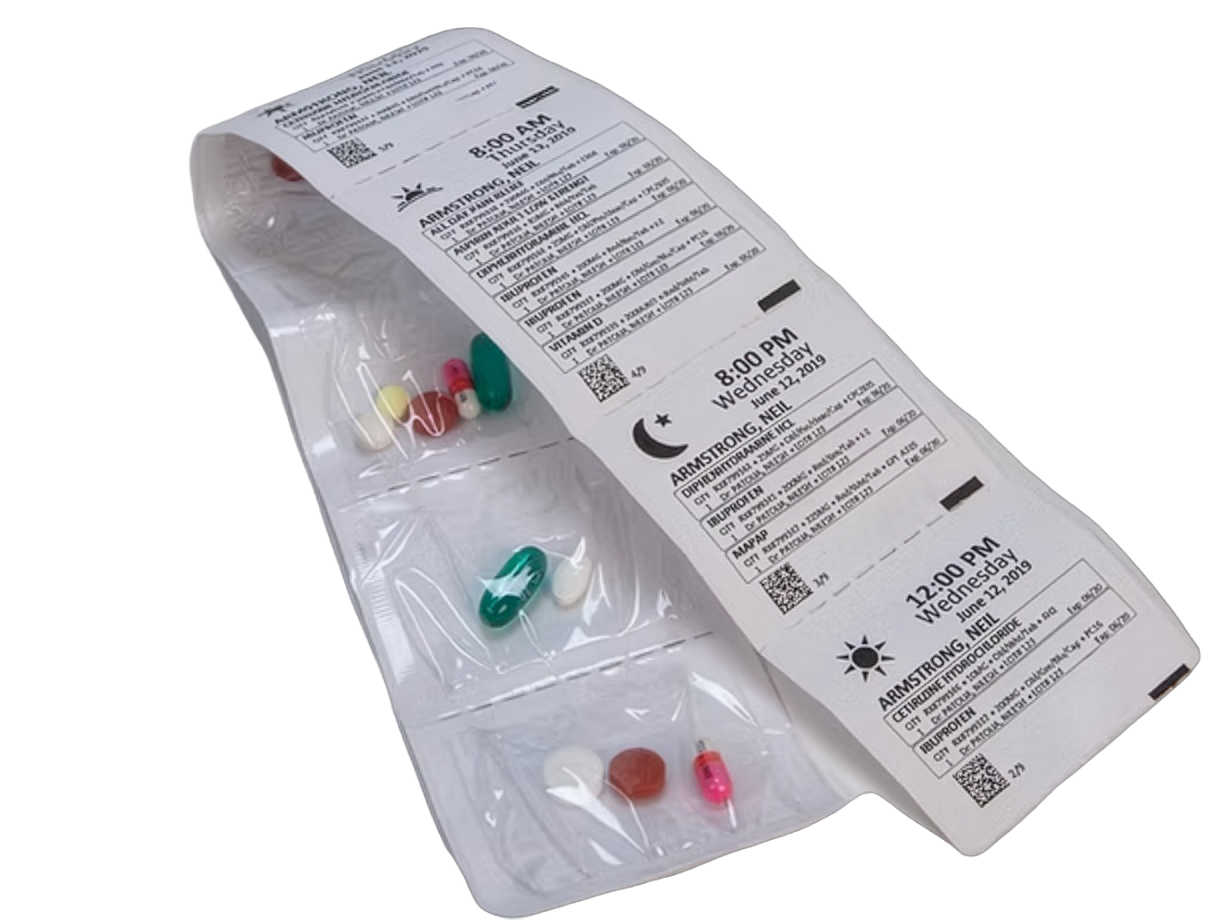
Multi-Dose Packaging goes by a lot of names. Pouch packaging. Strip packaging. Adherence packaging. Whatever you call it, the idea is simple. Instead of a row of amber bottles on your counter, your medications come in small sealed pouches, sorted by date and time and joined in a strip. These strips of pouches come in a box about the size of a box of crackers. When it’s time for the next dose of your medicine, you tear off the next pouch and take everything in it.
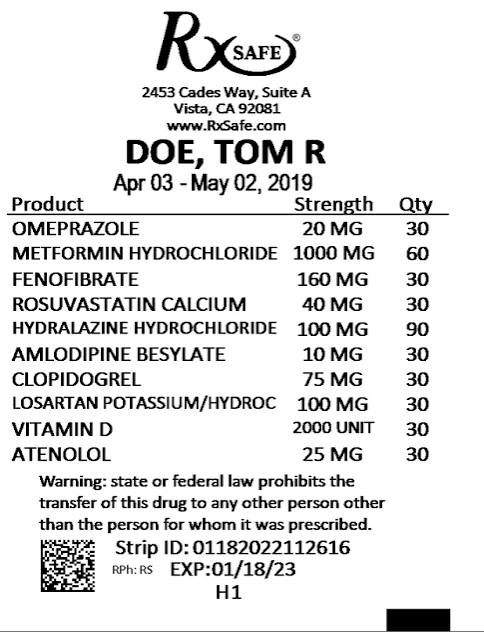
Each pouch is printed with your name, the date of the dose, the time of the dose, and exactly what’s inside (metformin 500 mg, amlodipine 5 mg, atorvastatin 20 mg, vitamin D, calcium) along with a description of the pill (tablet, oblong, white, RB | 54). If you take medications twice a day, you get two pouches per day, and they will be labeled with the time of day (MORNING, BEDTIME, etc.). If you take everything in the morning, you get one pouch per day.
The pouches come joined in order, so the next one to tear off is always the next dose you’re due for. If this morning’s pouch is still on the strip, you haven’t taken it. If it’s gone, you have. The strip answers the “did I take my medicine?” question before you finish asking it.
Why It Matters
Roughly half of all patients with a chronic condition don’t take their medications as prescribed. This nonadherence is linked to an estimated 125,000 preventable deaths every year in the United States, and up to $300 billion in avoidable healthcare costs.
The biggest reason people don’t take their medication as prescribed? A study of 600,000 patients found that more than two-thirds of nonadherence came down to forgetfulness. With the pouches, you don’t have to remember five medications. You have to grab one pouch on your way out the door. You can even take it at work.
Does strip packaging actually help patients? Studies say yes. In one community pharmacy study, 88% of patients using pouch packaging said they missed fewer doses, and 86% felt more confident managing their own medications. That second number matters enormously to older adults who want to keep doing exactly that.
A large meta-analysis (a study that combines many studies) found patients using this kind of packaging reached 71% adherence, compared to 63% for people managing bottles the traditional way. Eight points may not sound dramatic, but over years of chronic disease management it adds up to real health. The effect was strongest when the packaging came from a pharmacy with direct patient relationships, not a mail-order warehouse.
Who Gets the Most Out of It
Who stands to benefit from adherence packaging? Almost anyone taking more than one or two daily medications, but a few groups especially:
People managing multiple chronic conditions.
Having high blood pressure, high cholesterol, and diabetes together is common, and managing it can mean taking six or seven pills a day at different times.
Older adults who want to stay independent.
Having the local pharmacy provide adherence packaging can mean the difference between patients managing their own medications and needing a family member to set up their pill box every Sunday night. Also, sealed, labeled pouches are safer for patients than a counter full of bottles because you can’t grab the wrong bottle when there are no bottles.
Caregivers
If you’re helping a parent or spouse with their medications, this removes the most stressful part of the job. No weekly organizers to fill. No second-guessing whether the morning dose got taken.
Travelers and busy professionals.
Strip packaging is perfect for the traveler and busy professional. Just tear off the doses needed for the trip and put them in your bag.
Children who may need to take medication while away from home.
If your child needs to take medicine while at school, camp, or another family member’s home, just send the doses needed along with your child.
How the Pouches Get Filled
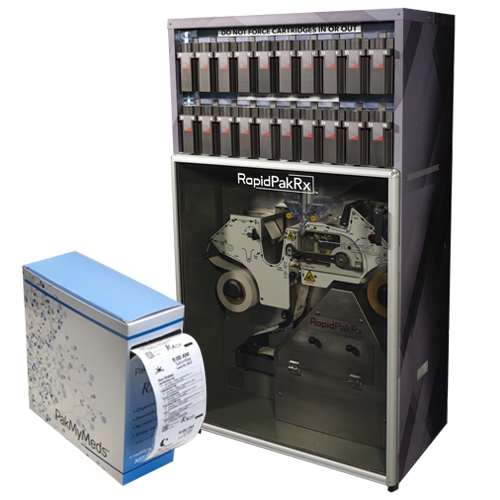
We have a machine at the pharmacy that holds your medications in separate calibrated canisters, and when we run your order, it drops the right pills into the right pouches, seals them, and prints the label on each one. Machines are very good at this sort of repetitive, exacting work, but a pharmacist still inspects every individual pouch before anything goes home with you.
We start working on your prescriptions before you run out. Rather than you keying your refills into an app or phone, we reach out to you about a week ahead of time. We check in to make sure you still need your medications, if they are working, and if you are experiencing any side effects. We will also ask if you need any medications we don’t put in the pouches, such as creams, eye drops, or inhalers. We work with your clinic to make sure we always have an accurate and up-to-date prescription order for your medications, and since we are working ahead, we have plenty of time to make sure we have the medications in stock. Gone are the days of going to the pharmacy to pick up your medications and the staff there says they have one of your medications, but the other one won’t be in stock until tomorrow, or the doctor hasn’t refilled it yet. This is how repeated and unexpected trips to the pharmacy can turn into a single, predictable pickup.
One note on how this works: we package a 30-day supply at a time, at no charge. That monthly rhythm is part of what makes the service work — it’s what gives us a reason to check in with you before every fill and catch a problem while it’s still small. Ninety-day supplies come in bottles instead.
What Goes in the Pouches (and What Doesn’t)
Tablets and capsules you take on a regular schedule are the natural fit, and that covers most of what people take daily. We also put most vitamins and supplements in the pouches, too, which is worth doing for a reason beyond convenience. It means a pharmacist has looked at your whole daily regimen in one place, prescriptions and supplements together, and checked how it all interacts. And before we package it, we will run it by your doctor and get a prescription for it. Making a supplement a prescription makes it FSA/HSA eligible, even if it wasn’t eligible before. And you don’t have to pay sales tax, either.
There are a few things we don’t put in your pouches, such as medications you only use occasionally or medications with variable dosing. There are also a few medications that the manufacturer requires be stored in the original container, but these are not common.

Why Most Pharmacies Don’t Offer Medication Packaging
If this works so well, why doesn’t your current pharmacy do it? Because it takes time, coordination, and attention to detail, which are things chain pharmacies just can’t offer with any consistency.
How to get started
Call us (no phone tree!), text us, stop in, or contact us via our website. Bring your medication list, or skip the list and bring the bag of bottles. We’ll sort it out at the counter. We handle the rest: transferring your prescriptions, contacting your clinic, and lining up your refill dates so everything lands on one schedule. You’ll know exactly when your first strip will be ready before you leave.
Published on Jul 29 2026
Last Updated on Aug 11 2026
By Ryan Bender
Categories: Medication Management, News
Contributors